
L’Origine
L’Origine
In a care setting, the cards become part of your practice as an amplifier of what is already happening, without replacing anything.
Why integrate it into a session
While Tajallī can be used on your own, it takes on a particular dimension when it is integrated into an accompaniment.
Tajallī acts directly on the structure, without going back through the story of one’s personal history or the details of the trauma.
It offers a neutral point of support to shift a session from the verbal and analytical to the level of frequency and embodiment.
You place yourself neither as a rescuer nor as an expert who knows better than they do: you put the person in direct contact with their own capacity for integration.
The role of the practitioner
In a session, your role is not to read the card for your client, to analyze it or to look for answers in it on their behalf.
Your own quality of Presence during the draw offers a stable field that helps the client get out of their head and drop into their body.
You keep them from slipping into interpretation, the search for symbols or projection. If they start to intellectualize, you simply bring them back to what they feel in their body.
Your neutrality and the stability of your nervous system serve as their anchor. You act as a ground wire that allows them to dissolve their resistances without tipping into panic or analysis.
The most beautiful accompaniment is the one that leaves the other free of you.
L’Origine · delivery expected in December
Practical applications
A card drawn at the beginning of the session, without trying to interpret it. This often makes it possible to establish a state, or to let a tension or a direction emerge without going through the mind.
The card present in the person’s field: placed beside them, in view, or under the treatment table. It acts as a point of resonance within the process underway.
Introduced at the moment you sense that a passage is not happening, it comes to facilitate the opening, without you needing to add any explanation.
After the session, the card serves as a support for integration: the person comes back into contact with it to extend what has been set in motion.
It becomes a point of anchoring or focus in other energetic or body-based practices.
Simplicity, neutrality and zero interpretation.
What happens in the body
The physical body works like a circuit and the nervous system like a conductor. The Spirit is a high-voltage frequency. When this current passes through the structure, it sometimes meets resistance: old programs or memory tensions lodged in the biology.
Heat rising or a discomfort settling in is not a problem; it is the natural friction that dissolves the obstacles in the body. If an intense charge emerges, the key lies in the absence of mental drama: letting the body express itself without attaching a story to it.
The safeguard in practice
In contact with the cards, certain automatic patterns resurface. They all have the same aim: to bring you back into the reassuring space of the known and the controllable.
There is no point in fighting them. It is enough to see them switch on, without getting caught in them, and to gently bring the attention back to what is there, in the body.
Pre-order
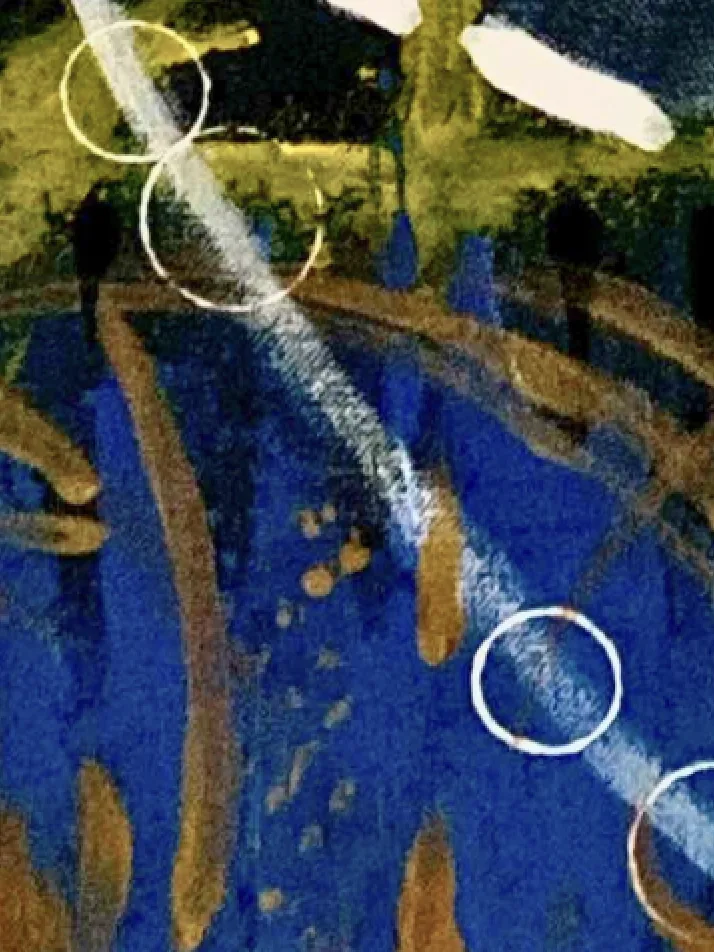
44 cards reproducing original paintings and the companion booklet, including a whole chapter devoted to use in session.
Pre-order my TajallīDiscover the experience
L’Origine · delivery expected in December
© 2026 Du Moi au Soi. All Rights Reserved